Doll PlayGround
- 3.2
- Rating
- 10.00M
- Installs
- Free
- Price

 Analysis by App-foxy
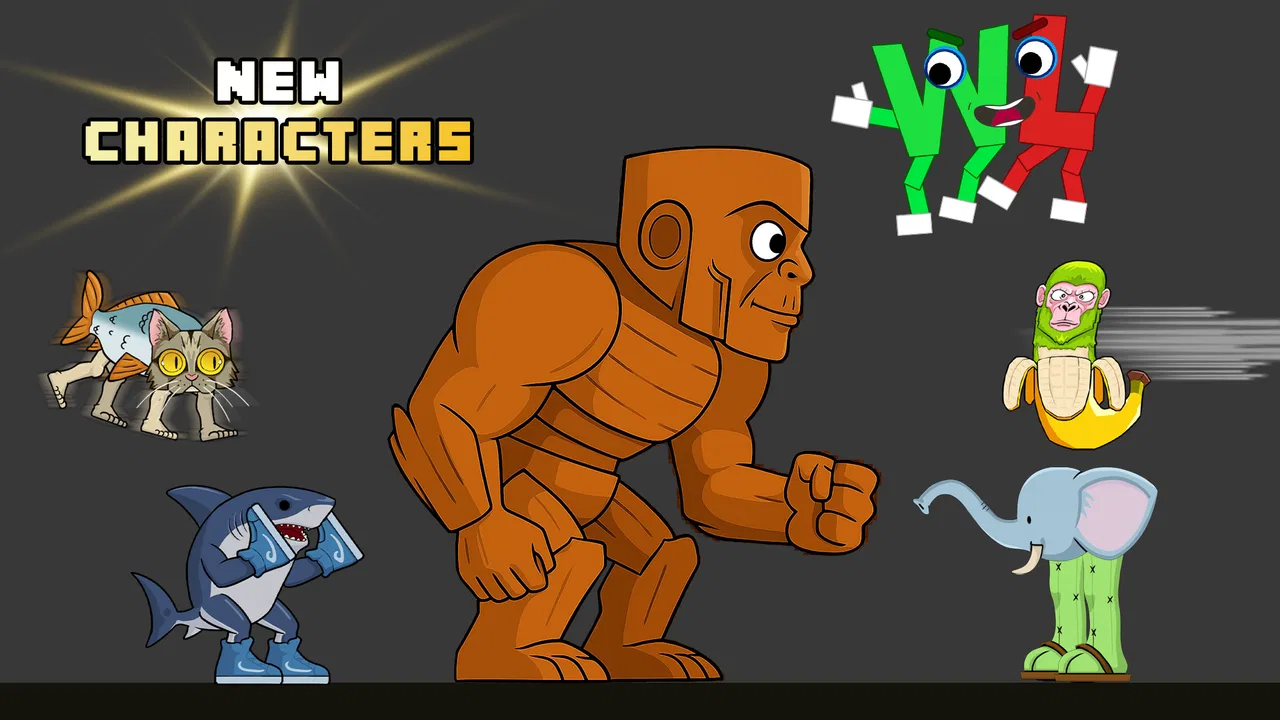
I spent time with Doll PlayGround as a physics-based simulation game, and my first impression was that it is less about completing a traditional mission and more about experimenting with ragdoll characters in an open-ended play space. That makes it immediately understandable: you place, move, and manipulate objects, then watch the game’s physics produce the result. It is the kind of experience I can pick up for a few minutes without learning a complicated story or a long list of rules.
That simplicity is also the reason it will not suit everyone. Players looking for a structured campaign, carefully balanced challenges, or a strong sense of progress may find the sandbox approach loose. I see it as a toy box rather than a conventional simulation with a clear destination. The appeal comes from curiosity and repetition: try something, observe what happens, adjust the setup, and try again.
How Doll PlayGround handles reading, navigation, and first-time use
The most approachable part of the experience is its visual premise. You do not need to understand a complicated fictional world before starting. The scene itself communicates the basic idea, while the ragdoll presentation makes the cause-and-effect relationship easy to notice. For players who prefer learning by looking and experimenting rather than reading long instructions, that is a useful advantage.
You May Also Like

 Blood Strike: 2.5 Anniversary
Blood Strike’s Loadouts Turn Every Drop Into a Tactical Gamble
A close look at Blood Strike’s custom loadouts: how fast access to signature weapons reshapes its battle royale rhythm, rewards preparation, and narrows the gap between fights.

 Pandora - Music & Podcasts
Pandora’s Music Is Easy to Start, but Harder to Recover
Pandora’s strength is its low-effort path from a seed to a station. Its weak spot is how much confidence it asks you to place in connection, setup, and quiet recovery.

 8 Ball Pool
 Is Built on Rivalries, Rematches, and Routine
A close look at the rivalries, rematches, shared routines, and unanswered safety questions that turn a quick pool match into a persistent mobile community.

 Samsung Music
’s Quiet Strength Is Playing What You Already Own
Its reach comes less from spectacle than from dependable access to a personal library. That simplicity is both the app’s strongest retention engine and its ceiling.

 AccuWeather: Weather Radar
AccuWeather Review: A Quick, Clear Forecast for Everyday Decisions
For everyday plans, the best forecast is the one you can understand quickly. AccuWeather makes rain timing, radar, and local conditions easy to act on, with a few trade-offs.

 Hill Climb Racing
Why Hill Climb Racing Still Turns Crashes Into One More Run
A tiny car, a bumpy hill and one more upgrade: Hill Climb Racing keeps resurfacing because its simple chaos makes every near-miss feel personal.
More From Our News Desk



In my experience, the game works best when I treat the interface as something to explore gradually. Instead of trying to understand every control immediately, I focus on one action at a time and watch how the doll and surrounding objects respond. This reduces the mental load during the first session and makes the sandbox feel less intimidating. It is also a practical approach for younger teens who may become frustrated by menus packed with unexplained options.
The Teen content rating matters here because the game’s central appeal involves ragdoll harm and destructive experimentation. Although the presentation is stylized rather than realistic, parents should understand that this is not a gentle dollhouse simulator. I would not recommend handing it to a child simply because the characters look cartoon-like. The tone is better suited to players who are comfortable with exaggerated virtual violence and understand the difference between a physics toy and real-world behavior.
Navigation is clearest when the player has a specific small experiment in mind. For example, I might create a simple arrangement, test how a character reacts, and then change one part of the scene. That workflow is easier to follow than randomly tapping every available control. A useful habit is to pause after each change and identify what actually caused the new result. In a physics sandbox, several objects can move at once, so changing too many things together quickly makes the outcome difficult to understand.
One of the game’s strengths is that it does not demand heavy reading to deliver its basic idea. That can help players who find dense text tiring or who are playing in a language they do not speak fluently. At the same time, visual simplicity should not be confused with perfect clarity. A sandbox can still become confusing when several controls, objects, or reactions compete for attention. I found that short sessions with a single goal were more comfortable than trying to master the whole playground at once.
The game comes from Tappy Game and is free to install, which makes trying it relatively easy. Its popularity is reflected in more than ten million installs, while the average rating sits at 3.2 from around thirteen thousand ratings. I read that combination as a warning to set expectations sensibly: plenty of people have tried it, but the experience clearly divides opinion. The free entry point is useful for testing whether the loose sandbox format matches your taste before spending anything.
Controls, timing, and different motor preferences
A ragdoll sandbox naturally asks for repeated interaction. You select, place, move, or trigger things, then observe the result. That can be enjoyable for players who like direct touch controls, but it may be tiring for anyone who has difficulty with precise taps, quick gestures, or repeated dragging. The game’s appeal depends on manipulating a scene, so control comfort is not a minor detail; it affects nearly every experiment.
I found it more manageable to make deliberate changes rather than rush. A slow setup gives me time to confirm that I selected the intended object and that the doll is positioned where I expect. This is especially helpful when the scene becomes visually busy. Players with reduced dexterity may prefer simpler arrangements, fewer objects, and experiments that do not depend on a perfectly timed action.
There is also a sensory trade-off. Physics reactions can be entertaining because they are immediate and unpredictable, but sudden movement and repeated impacts may feel overwhelming for players who are sensitive to visual motion or intense on-screen activity. I would approach the game in a calm environment, lower the device volume if needed, and take breaks when the scene becomes too busy. Those are ordinary practical adjustments, not substitutes for dedicated accessibility tools, but they can make short sessions easier to control.
The game is less suitable for someone who needs a highly predictable sequence of steps. Even when I repeat a setup, the visual result can feel more like an event to observe than a perfectly controlled animation. That unpredictability is the point for many players, yet it can become frustrating if you need exact placement and consistent outcomes. A conventional puzzle game would be a better choice when precision and repeatability matter more than experimentation.
One useful technique is to separate construction from action. I first position the doll and objects, then stop touching the screen for a moment to check the arrangement. Only after that do I activate the experiment. This two-stage method reduces accidental inputs and makes it easier to identify whether a problem came from placement or from the interaction itself. It is a small change, but it makes the sandbox feel less chaotic.
Playing in short sessions, shared spaces, and different situations
Doll PlayGround fits naturally into short breaks. I can open it when I have a few spare minutes, create a quick scenario, and stop without feeling that I have abandoned a long quest. There is no need to remember a complex plot or maintain a large inventory in my head. That makes it convenient for casual play on a phone, particularly when I want something interactive rather than a passive video.
It also works as a curiosity-driven activity for people who enjoy testing systems. One realistic use case is a teenager waiting for an appointment who wants a game that can be explored in brief bursts. Another is a player who enjoys showing a friend a strange physics reaction and then letting the friend try to recreate it. The game’s sandbox format supports that kind of informal sharing better than a story game that depends on being at a particular chapter.
However, the same open-ended design can be awkward when you need quiet, predictable entertainment. In a shared room, repeated impacts and fast movement may attract attention or become distracting, so I would use headphones only if the game’s audio is comfortable for you and take care not to lose awareness of your surroundings. On public transport, a loose physics scene can also be harder to control if the device is moving. A turn-based game or a simple puzzle may be more practical in those conditions.
Device compatibility is broad in one important respect: the game supports Android devices running version 7.0 or later. The current version is 3.5.4.8, so players using older phones should check that their device meets the operating-system requirement before planning around it. I would also keep expectations realistic on modest hardware. Physics-heavy scenes can become less comfortable when too many elements are active, so building smaller experiments is a sensible way to preserve readability and control.
The free model lowers the barrier to trying the game, but optional purchases range from ninety-nine cents to twenty-nine dollars and ninety-nine cents per item. I would decide on a personal spending limit before exploring additional content or options. This is particularly important for a sandbox because experimentation can encourage repeated tapping and browsing. If you are reviewing it for a younger player, discussing purchases in advance is more useful than assuming the free download means the entire experience has no spending decisions.
Where the experience becomes less inclusive
The biggest limitation is that the core idea is built around physical manipulation and visual observation. Players who cannot comfortably distinguish moving objects, track rapid changes, or perform repeated touch gestures may have difficulty getting the same value from it. I did not find a reason to assume that the game provides specialized alternatives for every ability, so I would not present it as a universally accessible sandbox.
Text readability is only one part of access. Even if the labels are easy enough to understand, the player still has to identify the correct object, place it accurately, and interpret a moving result. That combination can be demanding for users with visual, motor, attention, or sensory limitations. A slower play style helps, but it cannot remove every barrier created by a physics-focused design.
Another barrier is the lack of a strong external goal. Some players need missions, progress markers, or clear success conditions to stay engaged. Here, the player has to supply the purpose. I enjoy that freedom when I am curious, but I can also see it becoming tiring for someone who wants the game to explain what to do next. If you prefer guided learning, a structured simulation or level-based game will probably feel more rewarding.
The Teen rating creates a further context issue. Even when the visuals are exaggerated, the subject matter may be unsuitable for sensitive players or for family settings where cartoon violence is not welcome. The game should be judged by its actual play style, not by the harmless-sounding word “doll.” I would be selective about where I recommend it, especially around children who may imitate what they see without understanding the fictional context.
Its 783 written reviews and overall rating suggest that the free download has not translated into universal satisfaction. I would not use the install count alone as proof that it will work for you. High reach tells me the concept is easy to discover; it does not guarantee smooth controls, comfortable presentation, or lasting interest. The right question is whether you enjoy making your own experiments and accepting imperfect results.
Who should try it, and who should choose something else
I would recommend Doll PlayGround to players who like physics toys, visual experimentation, and short sessions without a fixed storyline. It is a good match for someone who enjoys asking “what happens if I change this?” rather than “how do I finish this level?” It may also appeal to creators of small scenarios who like arranging a scene and observing the consequences.
I would be more cautious recommending it to players who need accessibility options tailored to specific motor or sensory needs, or who find rapid movement and virtual violence uncomfortable. It is also not my first choice for someone seeking a calm dollhouse experience, a polished narrative, or a competitive challenge. In those cases, a gentler simulation, a puzzle game with explicit goals, or a story-driven alternative would likely be a better fit.
For new players, I suggest beginning with a deliberately small setup. Use one character and only a few objects, then change one variable at a time. This reveals how the playground behaves without turning the screen into an unreadable pile of motion. It also creates a repeatable routine: build, observe, adjust, and compare. That method gives the game more depth than random tapping and makes it easier to decide whether the physics are genuinely entertaining for you.
I also recommend treating the app as an occasional sandbox rather than expecting endless progression. The novelty comes from discovering reactions and inventing situations, so enjoyment depends on how many experiments you can imagine. If your ideas run out quickly, the absence of a traditional campaign may become obvious. If you naturally enjoy testing boundaries and creating odd little scenes, the same openness can keep it interesting for longer.
My inclusive verdict after using the sandbox
Doll PlayGround is a recognizable simulation game with a very specific personality: direct, experimental, and centered on ragdoll physics rather than narrative achievement. Tappy Game has made the basic concept easy to approach, and the free download gives curious players a low-risk way to see whether the format works for them. The current version, 3.5.4.8, keeps it relevant for players using supported Android devices, while the Teen rating makes the intended context clear.
My recommendation is conditional but positive. The best way to enjoy it is to use it as a controlled experiment, not as a conventional game with a checklist. Keep scenes simple, change one thing at a time, and take breaks if movement or repeated impacts become tiring. Those habits improve both readability and control, especially for players who need a slower pace.
I would not call it an inclusive choice for every player, because its central mechanics still rely on touch precision, visual tracking, and comfort with stylized violence. Still, it offers a useful kind of freedom for players who want to explore without pressure. If that sounds like your style, the free entry point makes it worth trying; if you need clear objectives, quiet presentation, or carefully designed support for particular access needs, another simulation will serve you better.
FAQs for Doll PlayGround
01What is Doll PlayGround, and what can you do in the app?
Doll PlayGround is a creative dress-up and doll customization experience where you can style characters, choose outfits, change hairstyles, and experiment with accessories and visual themes. It is designed for casual play rather than a competitive challenge, making it suitable for users who enjoy fashion, character design, and creating different looks. Available options may vary depending on the version and device.
02Is Doll PlayGround free to download and play?
Doll PlayGround can generally be downloaded without an upfront payment, but the free version may include advertisements, optional purchases, or locked items. Some clothing, accessories, backgrounds, or customization features may require additional payments or progression. Before downloading, check the store listing for the current pricing, in-app purchase details, and any subscription information, since these conditions can change with updates.
03Does Doll PlayGround require an internet connection?
The basic customization and doll-design features may work without a constant internet connection, which is convenient for casual use while traveling or when access to mobile data is limited. However, advertisements, updates, cloud features, special content, or purchases may require internet access. Offline availability can also differ between Android and iOS versions, so it is worth testing the app after installation.
04Is Doll PlayGround appropriate for children?
Doll PlayGround has a simple, colorful concept that may appeal to children and younger users, but parents should review the app before allowing independent play. Advertising, optional purchases, external links, and the type of user-generated or promotional content shown can vary. Parental controls and purchase restrictions are recommended, especially if the device is shared or payment details are stored on it.
05What permissions and device requirements should you consider before installing Doll PlayGround?
Before installing Doll PlayGround, check that your phone or tablet has enough free storage and runs a supported version of Android or iOS. The app may request permissions related to notifications, device storage, or network access, depending on its features and version. Review each permission carefully and deny anything that does not seem necessary. Also verify the official store listing for compatibility and the latest requirements.
Pros
- Creative doll customization encourages imaginative play.
- Large selection of outfits
- hairstyles
- and accessories.
- Simple touch controls are suitable for younger players.
- Colorful visuals make the playground appealing and easy to explore.
- Offline play is convenient when no internet connection is available.
Cons
- Some items or features may require in-app purchases.
- Repeated activities can feel limited after extended play.
- Ads may interrupt gameplay in the free version.
- The app may use considerable storage for extra content.
- Younger children may need supervision around purchases and ads.

Doll PlayGround
Gallery